
★★★★★
“I am 62, retired, and still new to bees. I did not need another online argument about the one ‘correct’ way to keep them. I needed a practical checklist that stopped me from freezing with a frame in my hands. This did exactly that.”
Mark D.
A practical visual decision guide for hobbyist beekeepers managing 1–5 hives, so you can tell when to treat, requeen, combine, feed, wait, record what you saw, or inspect again.
A complete visual reference pack for first- and second-year hobbyist beekeepers who want clear inspection decisions without digging through five different sources every weekend.
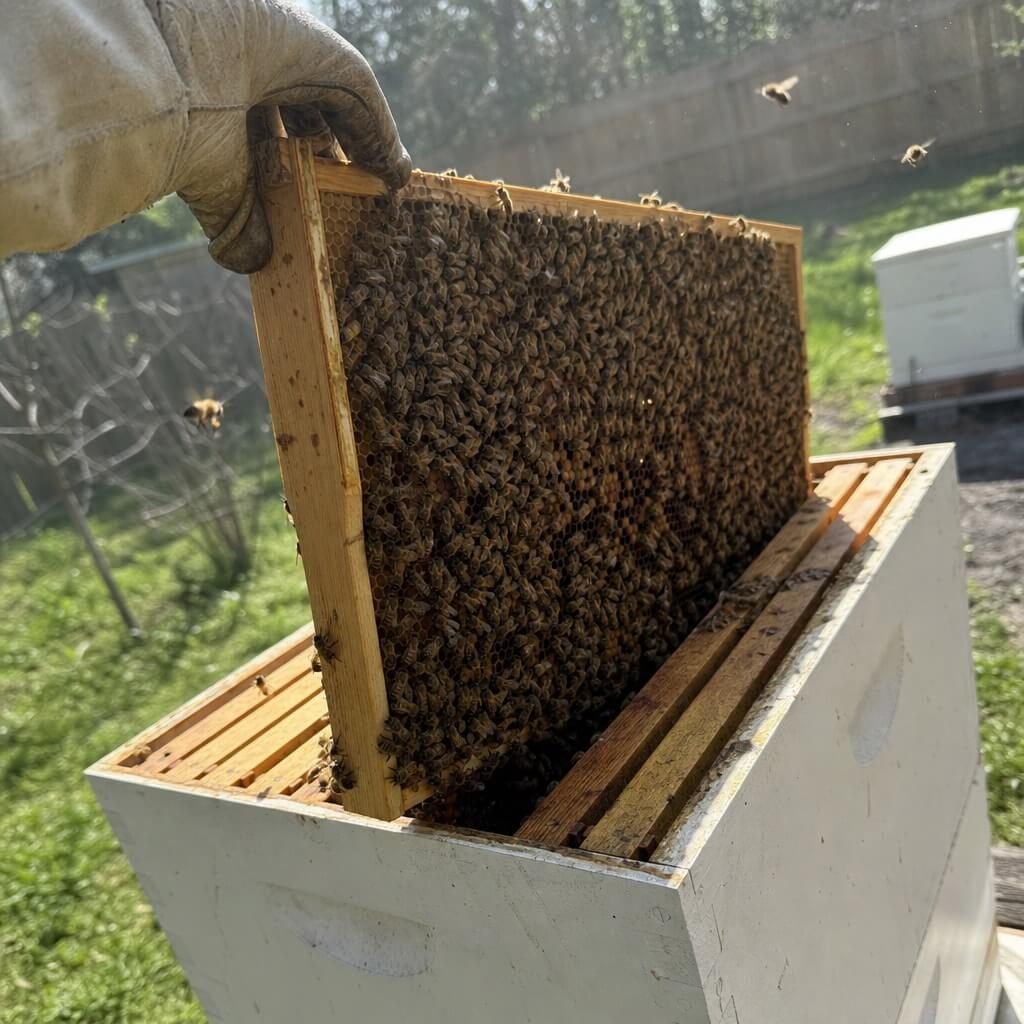
“The mite-count section finally turned the numbers into a decision I could use. Before this, I would get a count, search online for an hour, and somehow feel even less certain. Now I can check the month, the percentage, the next step, and when to test again.”
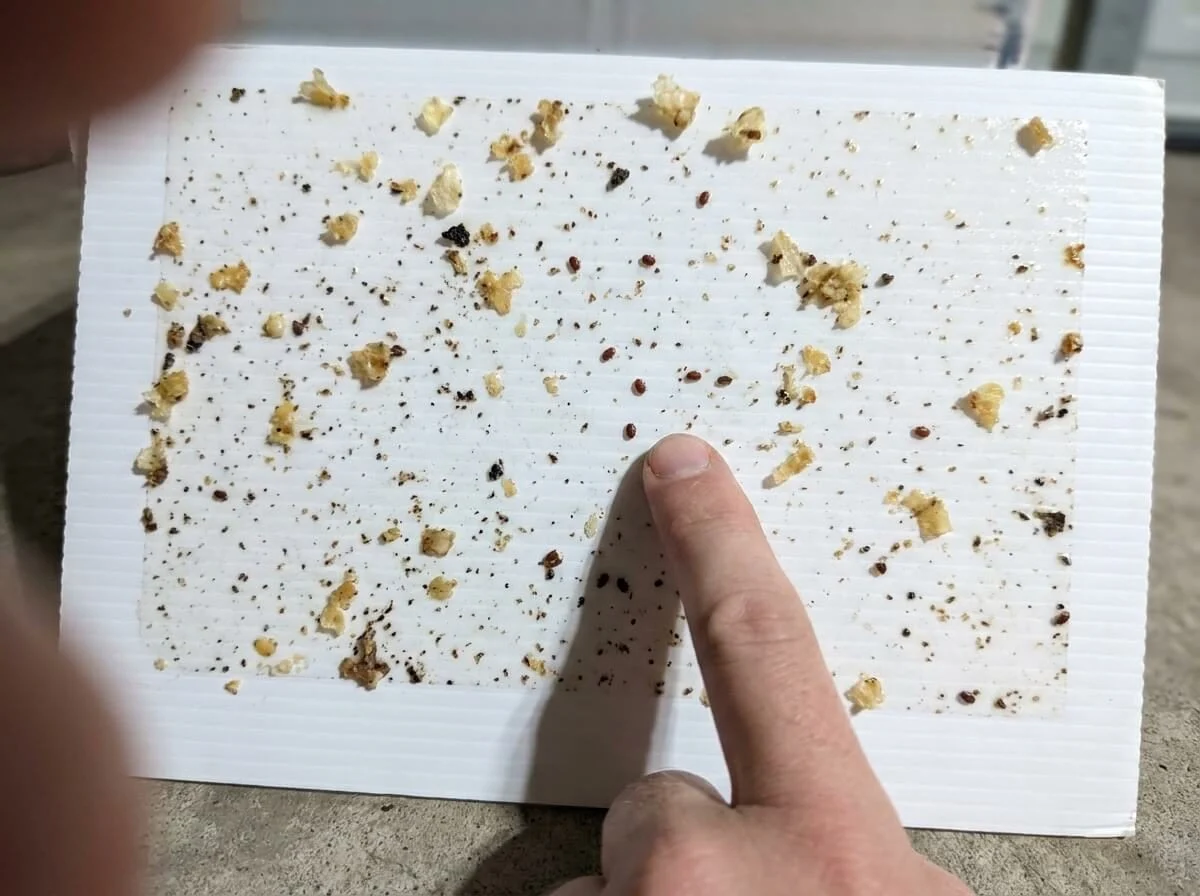
“Finally, something useful that does not make me sit through fourteen videos before I open the hive.”
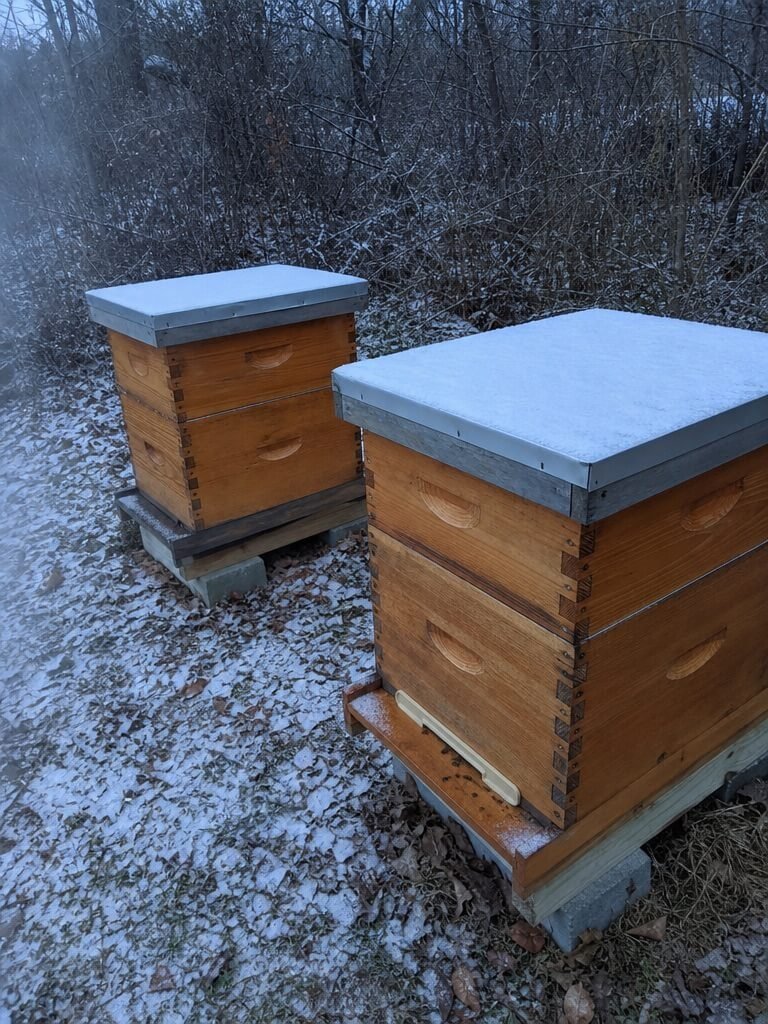
“This is what I expected the beginner books to give me. I did not need more bee biology. I needed to know what to check when the brood pattern looked wrong and I was standing there sweating inside my veil.”
Inside the 3-volume Atlas — written for the hobbyist beekeeper who wants one practical place to check before making the next decision.
Volume I helps you work through queen status, brood pattern, drone-laying signs, failing queen clues, supersedure, emergency queen situations, and when to wait versus act.
Volume II covers Varroa, small hive beetle, wax moth, nosema indicators, AFB/EFB warning signs, chalk brood, sac brood, and deformed wing virus clues.
Volume III helps with spring buildup, swarm season, summer flow, fall feeding, winter prep, oxalic acid timing, and dead-out forensics.
Use a visual field atlas to compare frame-level clues before you act. It helps you check brood, stores, pests, and colony stress without jumping to conclusions.
Keep the reference close to your hive gear and move from what you see to the next decision with less guesswork.
“I am 62, retired, and still new to bees. I did not need another online argument about the one ‘correct’ way to keep them. I needed a practical checklist that stopped me from freezing with a frame in my hands. This did exactly that.”

“I thought the answer was having a mentor available every time I opened a hive. What I really needed was a clearer way to work through what I was seeing. It does not replace learning—it makes the learning easier to use.”
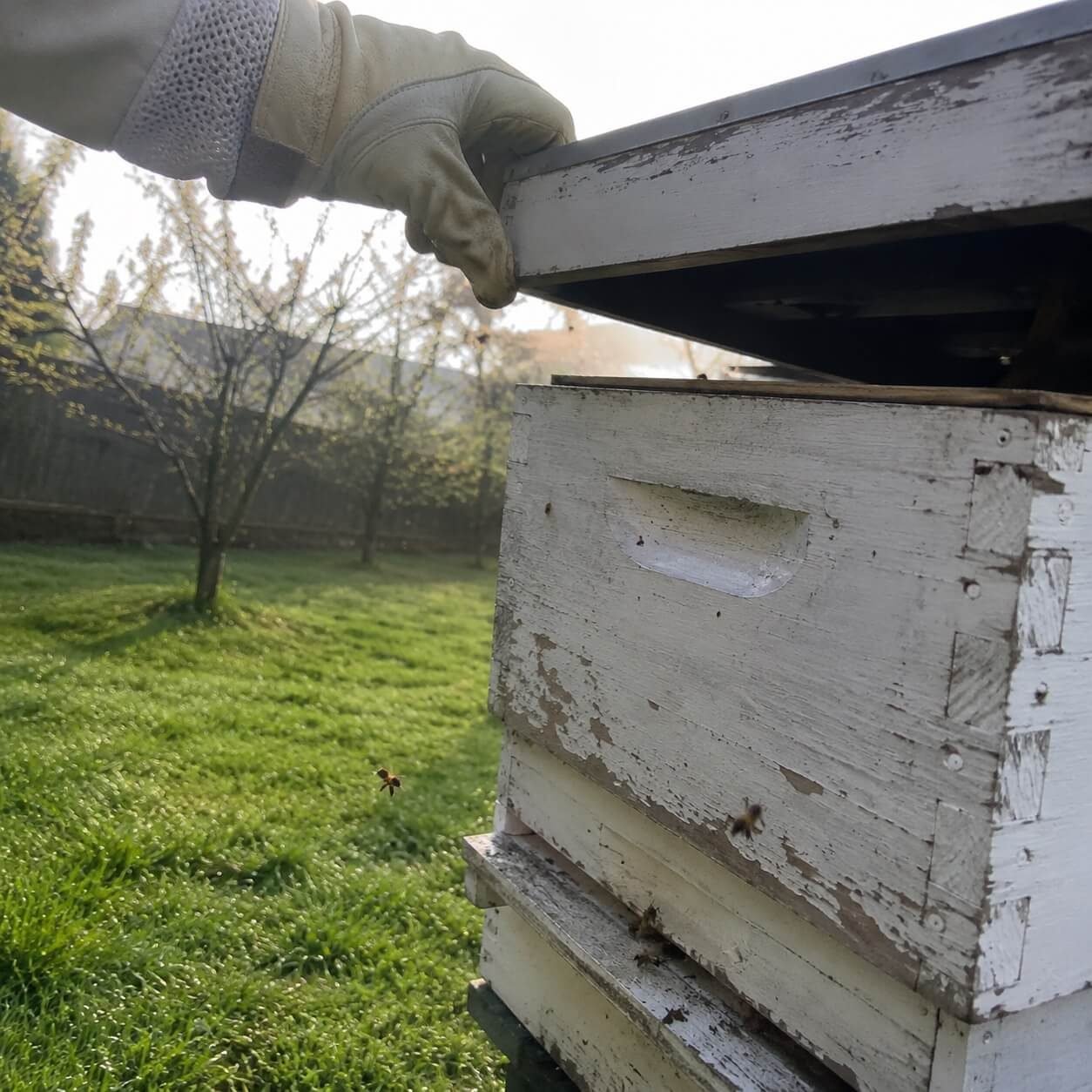
“Brood inspections used to scare me because I thought I had to identify everything perfectly on sight. This slowed the process down for me. Spotty brood? Check this. Too much drone brood? Check this. No eggs? Do not panic—inspect again on this timeline. It stopped feeling like a test I was failing.”
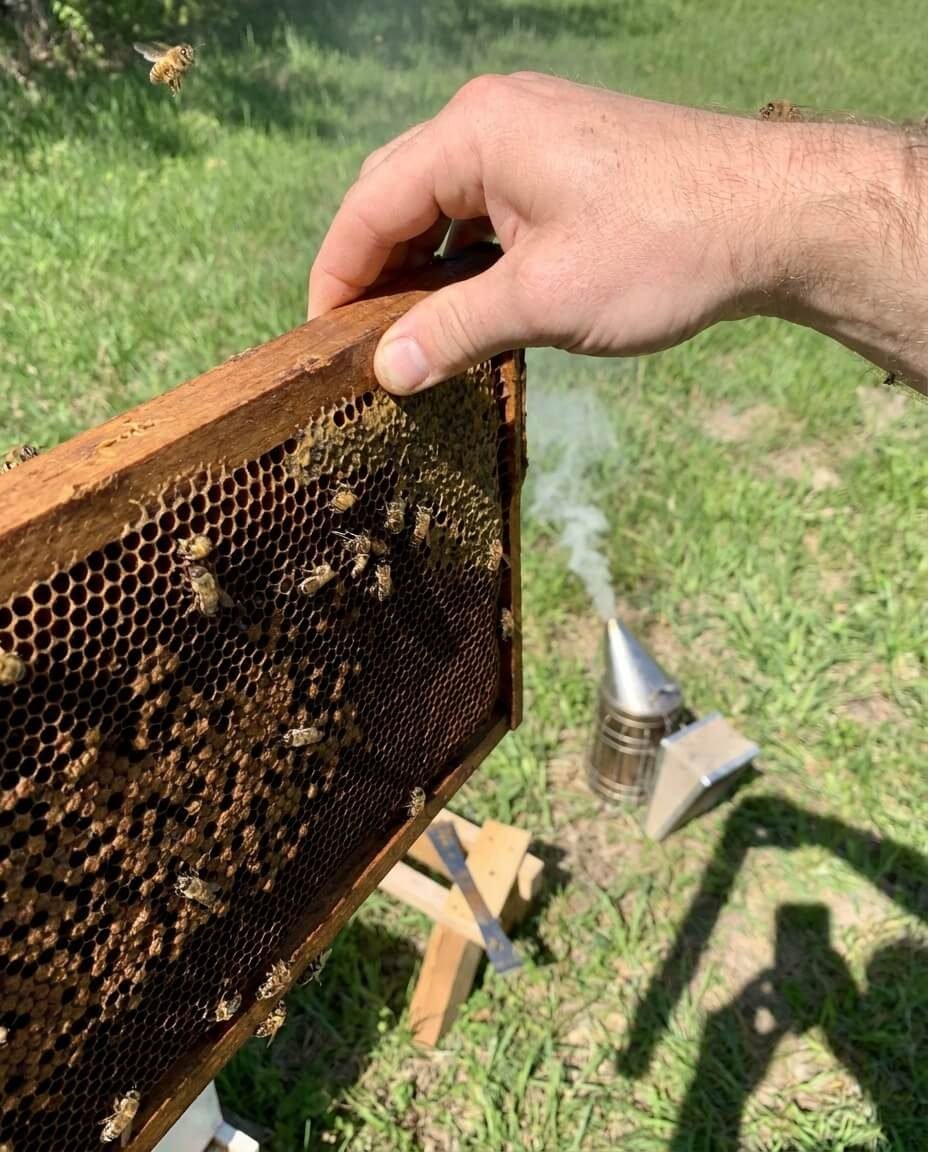
“No fluff. No cute filler. Just something I can actually use.”
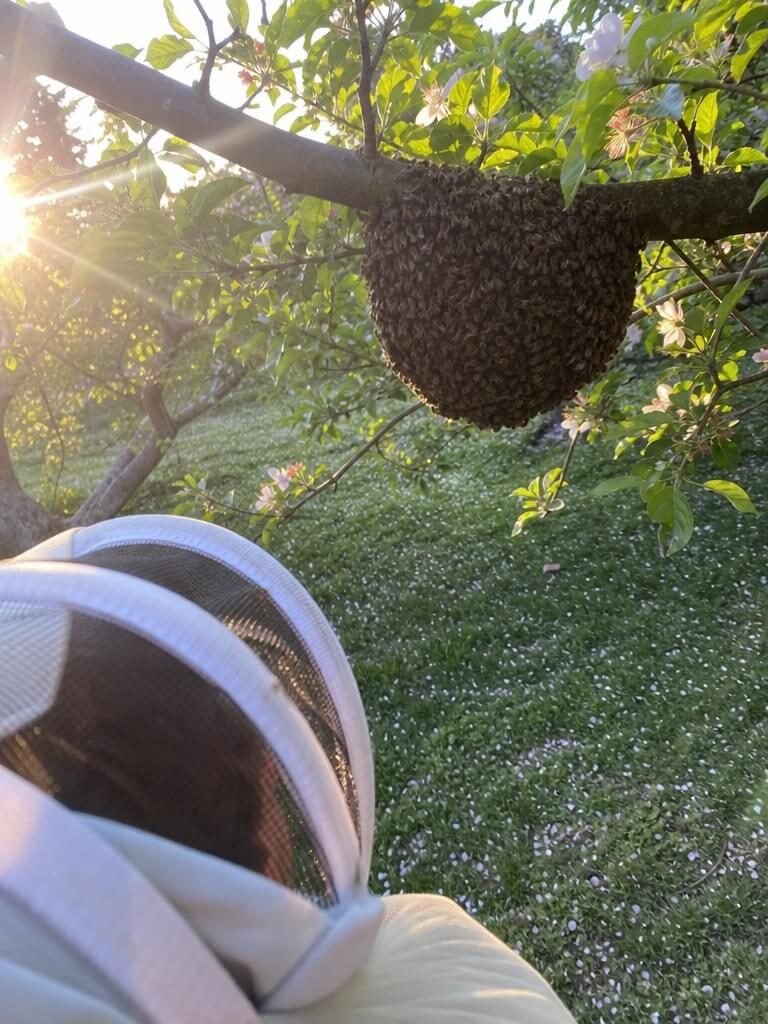
“A couple of weeks after buying it, I heard myself say, ‘Let’s check the decision path before we act.’ That is completely new for me. I normally overreact or wait too long. This gives me a calmer middle step.”
Add the Atlas to your cart and finish the secure checkout.
Receive immediate access to all three digital volumes and the 3 included field bonuses.
Open the relevant volume before your next hive inspection, then keep the pocket cards with your hive tools for fast reference in the apiary.
Your access link will arrive in less than a minute after your order is completed.
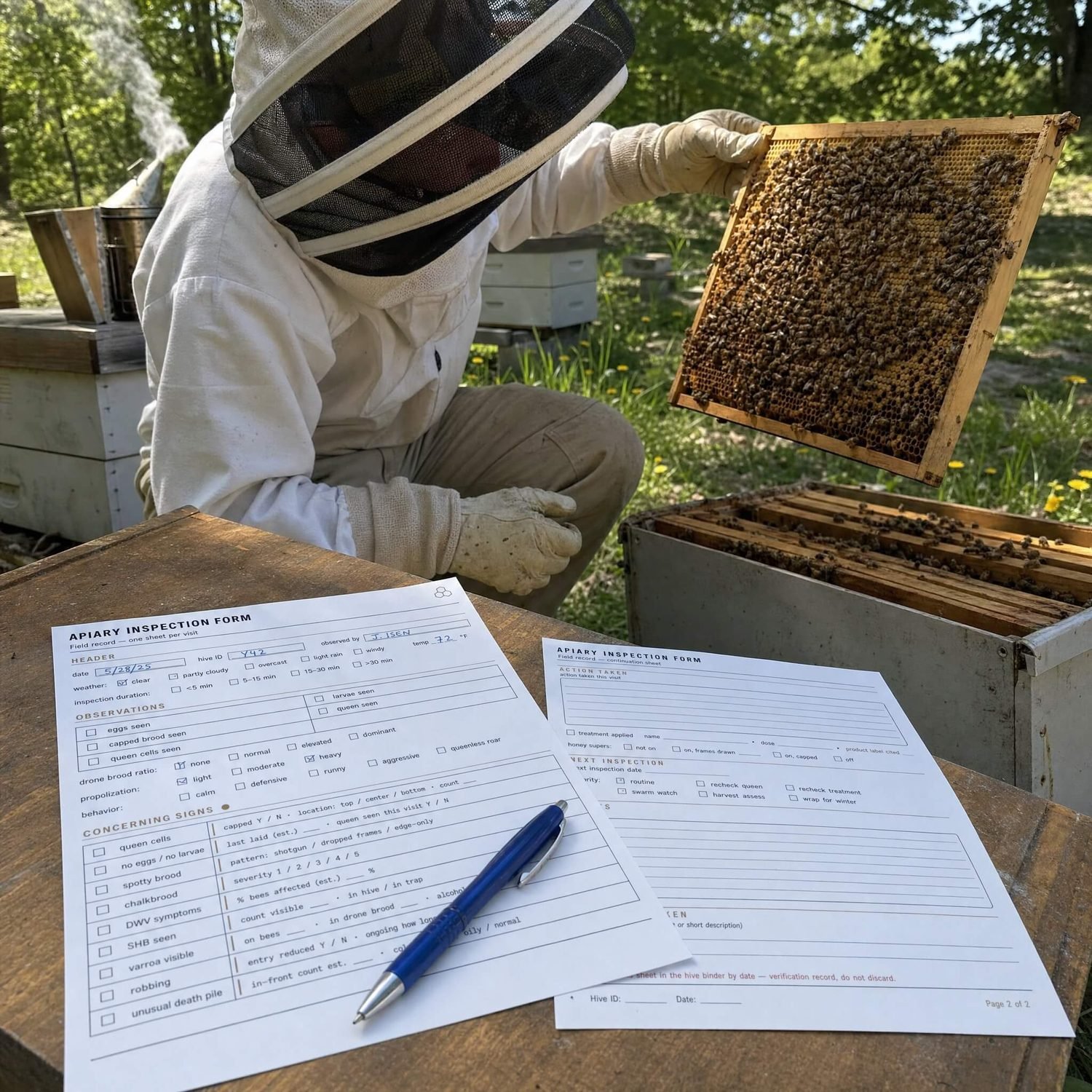
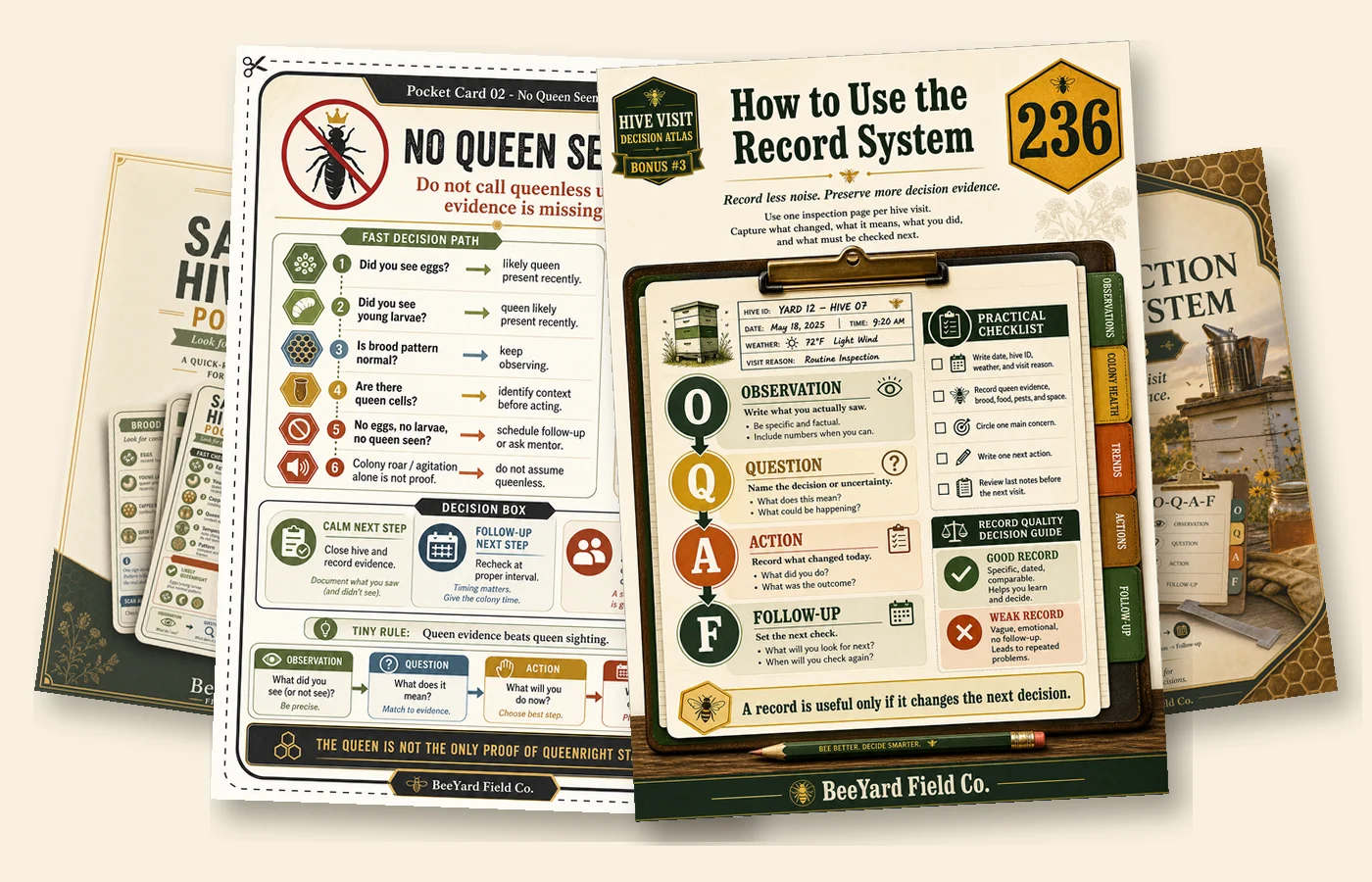
The pocket-card deck gives you quick decisions at the hive. The inspection record system helps you record each visit, track what changed, and know what to check next. Use them on your phone, tablet, computer, or print them for your hive kit.
The pocket cards keep the most common inspection decisions close at hand. The inspection record system turns each visit into usable evidence you can review later.
If you are looking for a famous beekeeper biography on this page, you will not find one—and that is deliberate. One beekeeper on YouTube tells you one thing, the next book gives you another rule, and even experienced members of the same local club can disagree. When every person becomes the source of their own authority, a beginner has no clear way to judge between the answers.
The Hive Visit Decision Atlas™ takes the opposite approach. Its decision paths are cross-checked against guidance published by USDA Beltsville Bee Lab, Penn State Extension, UMN Bee Lab, Cornell, NC State, AFDO, and similar institutions—the same kinds of sources local extension agents rely on. We did not invent the science. We reviewed it, compared it, and organized the areas of agreement into practical decisions you can use at the hive.
Still have a question? Email us at hello@beeyardfieldco.shop and we will get back to you within 24 hours, 7 days a week.
Yes. It is designed mainly for first- and second-year hobbyist beekeepers, while also helping anyone managing 1–5 hives who wants clearer inspection records and more practical decision support.
You do not need commercial experience or a master-beekeeper background. Everything is written for real backyard use.
No. It is not a video course, coaching program, live class, or certification.
It is a digital field-reference system with three visual PDF volumes, three included field bonuses (pocket cards, symptom atlas, and inspection records).
As soon as checkout is complete, the download link is sent to you by email.
You can save the files on your computer, tablet, or phone, and print the materials you prefer to keep on paper.
Yes. The PDFs are made to be printed at home or by a local print shop.
The pocket cards are especially useful when printed, cut, and laminated so you can keep them with the rest of your hive equipment.
It helps you work through common hive observations, seasonal timing, and institution-cited guidance so the next decision is clearer.
No guide can make every decision universal. Local weather, nectar flow, equipment, colony strength, product labels, and regulations still matter. Use the Atlas as decision support—not as a replacement for a local inspector, veterinarian, extension office, or experienced mentor.
YouTube can be helpful, but the information is scattered. One question can quickly lead to six different answers from six different beekeepers.
The Atlas is organized around the decisions you face during an inspection. It moves from what you observed to what you should check next, with institutional references where they are relevant.
Instead of becoming another personality-led opinion source, it gives you a practical system you can keep and use again.
A normal beekeeping log mostly gives you blank spaces for notes.
This system helps you interpret what those notes may be pointing to. The decision paths connect observations to likely categories and next steps—queen, brood, pests, season, feeding, winter preparation, or a follow-up inspection.
You still keep the records, but the records become much easier to act on.
Your purchase is protected by a 90-day money-back guarantee.
If the system is not useful for you, reply to your receipt email or contact support within 90 days and ask for a refund.
Yes. For personal use, you can keep the files on your computer, tablet, and phone.
A practical setup is to store the complete PDFs on your main device and keep printed pocket cards with your hive kit.
The complete system contains 250 visual PDF pages across the three core volumes, the Frame-by-Frame Symptom Atlas™, the pocket-card deck, and the Hive Inspection Record System.
The page count appears here in the FAQ so the main sales page can stay focused on the result: clearer inspections and fewer moments of guessing.
Send us an email at hello@beeyardfieldco.shop and we will be happy to help.